HDR Food Photography
April 11, 2006 | by Heidi | Filed under
I'm typically a no-frills kind of person when it comes to photography. I shoot with the smallest DSLR I can get away with, frame shots in camera, and use Photoshop mainly for minor tweaking of exposure and color balance. In a bit of a departure, I decided to break out the tripod and digital processing tools to play around with HDR food photography (high dynamic range) this week.
A lot of the HDR photography right now is landscape or architecture-based - well, most of my favorite shots are. I was a bit curious about how the process would affect food shots.
First off lets talk about my camera setup. I have a few cameras:
- Fuji GA645
- old-school Yashica-mat (from Kurt)
- pocket digital p+s
- various film SLRs
- Lomo
- etc.
Most of the time I shoot (and travel) with the Canon 20d. Without the grip it is small enough to carry around without being too intrusive or much of a burden. On shoots where I need more fire-power (or want the full-sensor), I take the Canon EOS-1Ds Mark II- a 16.7 mega-pixel monster clearly designed for big, brawny guys. Put a large lens on this camera and you are in for sore arms the next day. I use fixed lenses - standard 50mm, 24mm, and occasionally a 100mm macro. I back up to my laptop and burn DVDs with a portable disk burner.

Detail, Las Meninas by Diego Velazquez, 1656 (see full image)
A bit about HDR photography (as I understand it):
Painters often represent a dynamic range in their work that would be impossible to capture using a consumer DSLR or film camera. In the Velazquez's Las Meninas for example notice the details in the highlights in the ivory skirt of the infanta Margarita, as well as the subtle tones in the dark shadows on the back wall. Film photographers dodge and burn to bring forth and emulate this range - something you can't capture in camera.
Your eye sees in high-dynamic range. Consumer cameras can only capture a slice of that range in any one exposure - somewhere between just six and nine stops. Think about the standard "sunset" vacation shot - if you meter on the sky, everything else goes to black. If you meter on the water, the sunset gets blown out. If your camera could handle more range (HDR) you would be able to correctly expose and bridge both the sea and sky. Make sense? Another example you will often see is the inside of churches - expose for the alter and your stained glass windows get blown out, expose for the windows and your altar goes to black. The way people are currently doing HDR, by merging multiple exposures, you now have a slightly clunky (yet effective) way of expanding the range of an individual image.
The other thing that happens when you start playing around with HDR - the aesthetic of your image changes. Because much of the food-related photography I do takes place in naturally, soft-lit environments (LDR) - expanding the dynamic range of each shot isn't such an issue. I often leverage the limited range of my camera to strategically blow out certain areas in an image. I'm interested in exploring what happens aesthetically with HDR in part because as high-end DSLRs are more and more affordable, more and more people are buying them, they are using the same set of lenses, and a natural by-product of this is that you get a same-ness to much of the (straight-out-of-the-camera) food-related imagery you see. So, I'm interested in exploring ways to get away from that sameness.

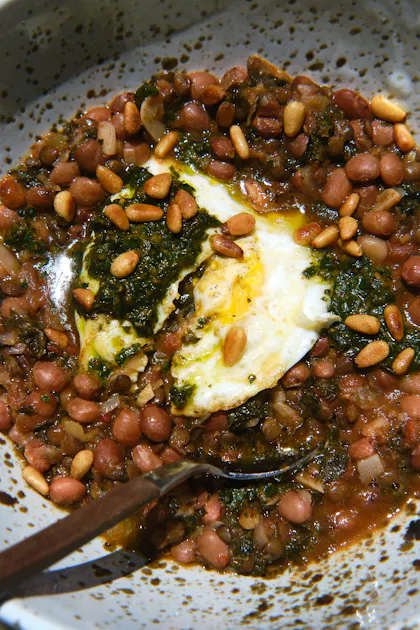
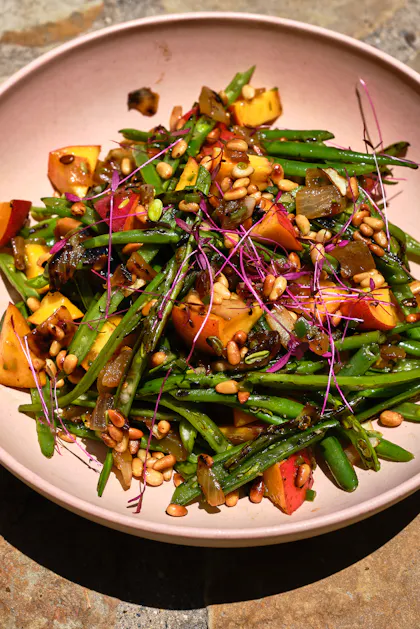
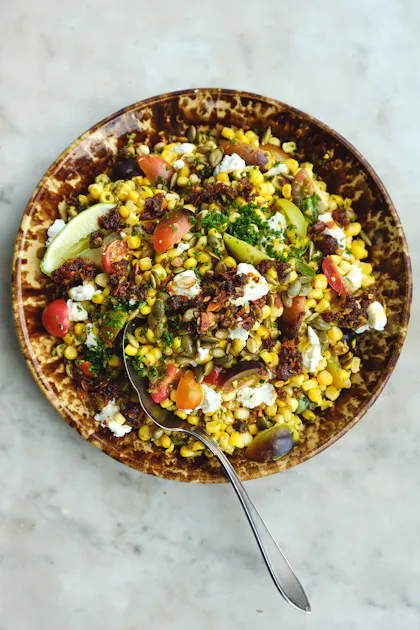
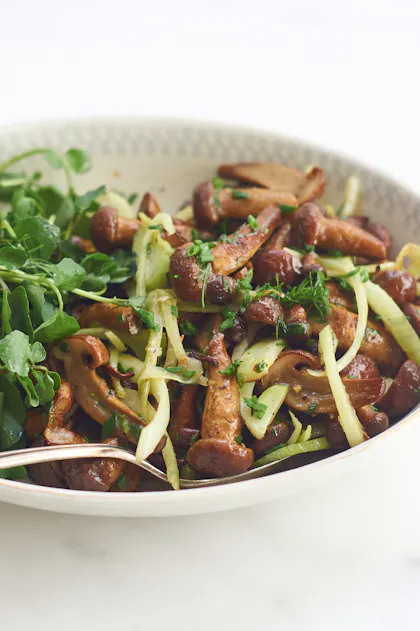
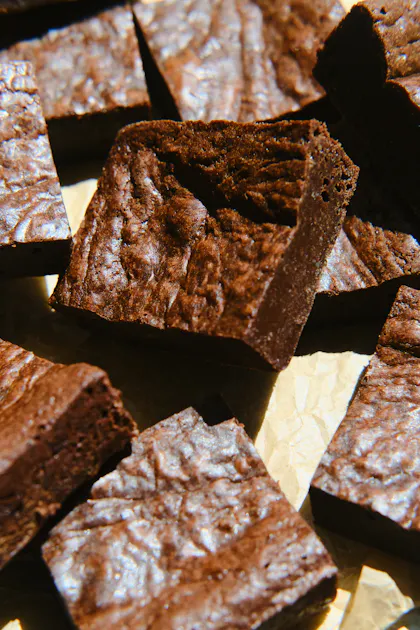
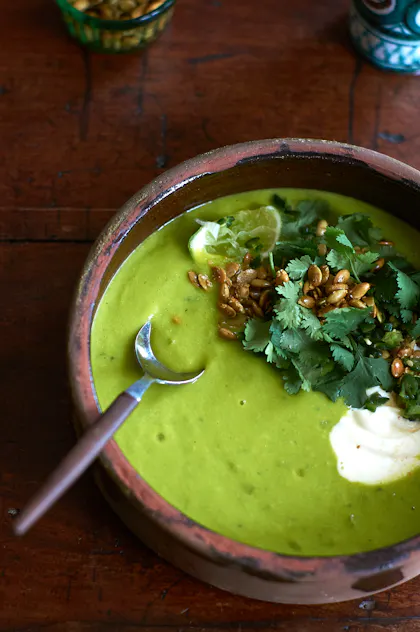
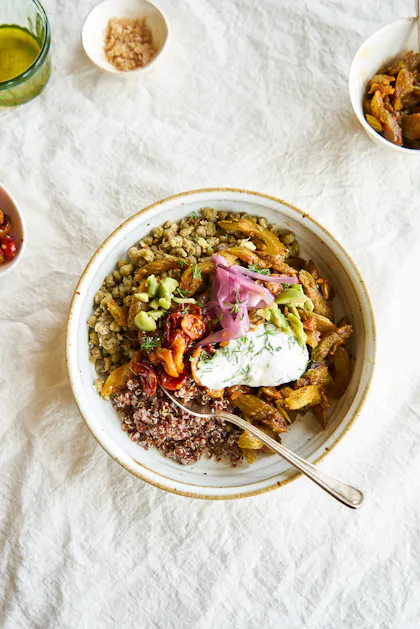
HDR image (see original non-HDR version, also a larger-version HDR). The non-HDR version of the cut-melon shot is here, larger version of the HDR here
How do you make an HDR Image?
For now true HDR input and output is pricey and rare....instead, HDR images are created by combining multiple shots of the same scene taken with different exposure settings. Current monitors can't even display the true HDR - so, for me it is more of an aesthetic experiment. HDR images just look different, often not in a good way - but I think there is promise here. Don't dismiss it - many are convinced this is the future of digital imaging.
Image capturing tips:
- use a tripod
- use the lowest ISO setting possible
- auto-bracket - do a series bracketing at 1-stop, and another at 2 stops
- more detailed tips
Photoshop CS2 gives you the ability to compile HDR images, I used Photomatix this time around.
For all you shutter bugs out there who want to give it a go, I set up a Flickr group for HDR food photography - feel free to upload and share:
http://www.flickr.com/groups/hdrfood/
Never miss a recipe!
Enter your email address to subscribe to 101 Cookbooks via email:
Your Comments
We use this kind of technology in the day job and Fred has been bugging me to use it on my food photos for about a year now. However, I just can't be affording myself a copy of PhotoshopCS to use as a toy at home.
I wish I had the time to futz around with this stuff, but I don't. At least not right now. If I was being more serious like you and doing it professionally, or creating pictures to frame, or for a book or something then I would definitely consider it.
I think fred might have some free software that does it that he was playing with. I will check in with him later about it and if so afford myself a little time to play!
Hi Heidi, i'm glad to decided to post about HDR as i've been so excited since i dicovered HDR with your last post.
I can't wait to be home - with a tripod- and give it a go!!!
xoxo
Fanny
You may know about this already, but there's an interesting blog on food photography at http://www.stilllifewith.com/, and she just cited you! I found it through a link from http://www.rootsandgrubs.com/, which is another pretty entertaining foodie blog.
Thanks for opening up a whole new world.
Any chance you would be willing to post a .hdr file? I would love to play with these in Adobe After Effects (think Photoshop with animation) as it supports a fair amount of stuff in HDR and its much more interesting starting with a HDR file.
Heidi, this was wonderful; I learned so much.
OOOOHHHH a techie post! I love love love it.
And the best part--- besides the photography I do actually know what you are talking about!
It makes it all the more exciting to move forward into the future with the rest of yous.
Seems to be THE new hype ;)
How did you learn everything about photography, where have you studied and would you recommend a certain college?
Hi Heidi,
great post! it's nice to read about something technical and educational that isn't a recipe but still involved in food, specialy photography!
Eva
Thanks for the very informative post, Heidi. Unfortunately, my pics always turn out sadly unappealing, primarily due to the photographer-me-...While I would love to participate in the Flickr project, my images are simply not worthy...But I will most definitely become a regular viewer of the collection!!! Your photographs are amazing! :)
It would be neat to see someone do a cookbook in this style - Hmmm...
Thanks for the insights!
Hello there Heidi,
this is the first time I'm posting in your site... I'm a photography university student and I've been watching your website for some time now(months)...
...I would like to congratulate you for your terrific work here with the recipes and the photographs and to tell you to keep up with it!
Sincerly,
Bruno
Chris,
I have the original set of images and the collapsed TIFF file, but I didn't save out at the .hdr stage. I could go back and reconstruct I suppose. Maybe - are you thinking about some sort of animation w/ After Effects?
Margaret, I did study photography as part of the visual arts program at UCSD, they also had a great vis. art computer lab outfitted with lots of SGI boxes at the time. This is where I learned how to build webpages, ftp files, make gif animations, stumble through html, and all that fun stuff.
You can do the same thing essentially with older film SLR cameras. There's a way to circumvent winding the film thus allowing you to shoot 2 exposures on the same frame and adjusting for both. I've never used it specifically for food still life, but for some really nice wildlife effects. There are some newer cameras out there that let you set the film advancement so that you are also able to double exposures (check your manual). Sorry that I don't have much more information, but I hope this sparks some thought processes and helps :)
I LOVE the picture of the melon. Any chance you want to sell a print of it???
Nice writeup.
Here's what I don't get: I think HDR is unneeded for these photos. I think properly adjusting the dynamic range from a SINGLE SHOT (yes, single shot) using a curves adjustment layer or levels should do the job.
Most modern DSLRs capture from 7-9 stops of dynamic range per exposure. Dpreview.com has done this test on every camera they test... and if you go check out their reviews, you know they're thorough.
A 3- shot bracket 2 stops each way is only 4 stops of difference. I wouldn't bother using HDR unless the dynamic range in your photos is extreme. You can even save yourself some time by shooting RAW and using 2 shots in your HDR... one shot pulled back for the highlights and another pushed for the shadows.
glad to see that Yashica is still in your camera bag! have been seeing references to this HDR stuff a lot recently but only now did I bother to follow through to some of the links and explore further, thanks to your post here. Too bad it only works with tripod based "still" shots, I guess using the technique on my snapshots is out for the moment.
Heidi, that is a very good explanation. This type of work is a nice vehicle for adding a more painterly dimension to my work, especially for selective emphasis of background elements. Thank you.
I use hdr sometimes when photographing interiors a real estate developer will want you to be able to see the inside and the view through a window. it looks "cool" but i think a lot of HDR can be really lame.