Classic Risotto
Creamy, textured, and just loose enough to ripple across the plate - this is the classic risotto you’re aiming for. Here’s how you get there, step by step.

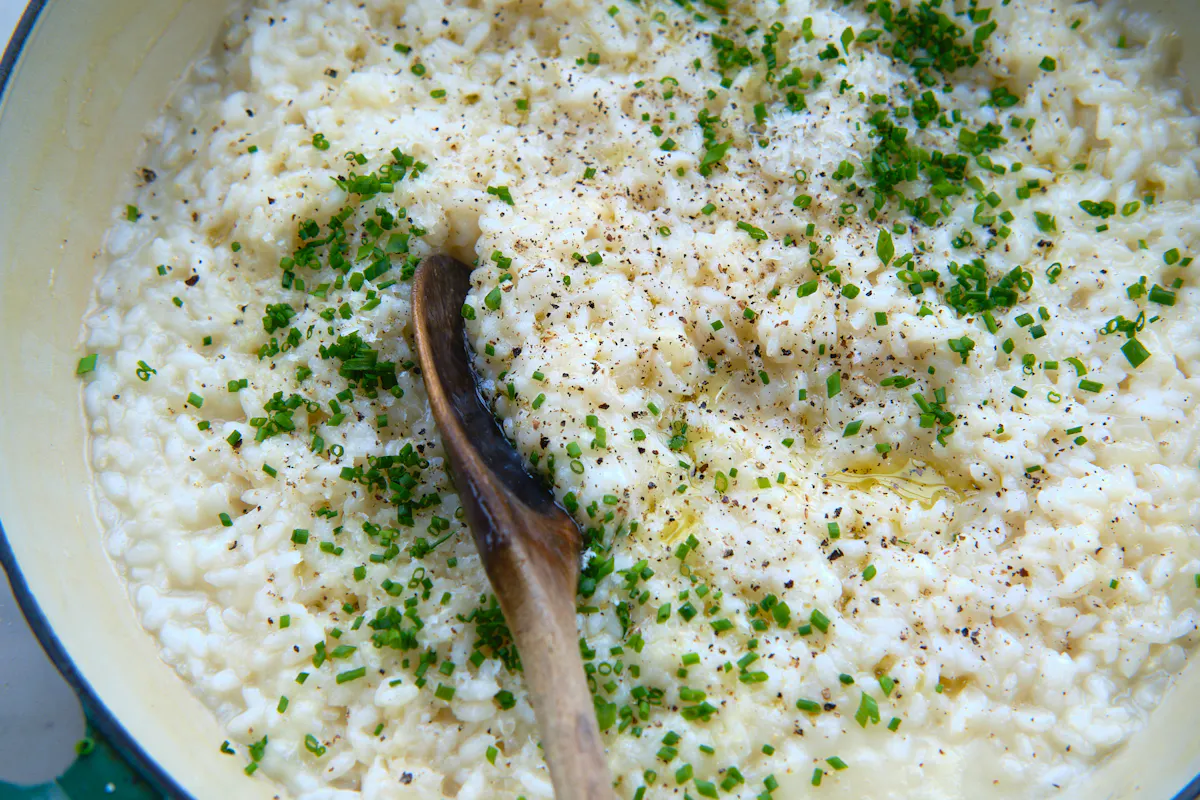
This is the first risotto you should learn to make. Simple enough to focus on technique, and delicious enough to return to over and over. The two hero ingredients are rice and Parmesan cheese, and the rest of the story is largely about method and approach. Pay attention to a few key details - pan shape, good rice - and you’ll be rewarded with a creamy, tender risotto every time.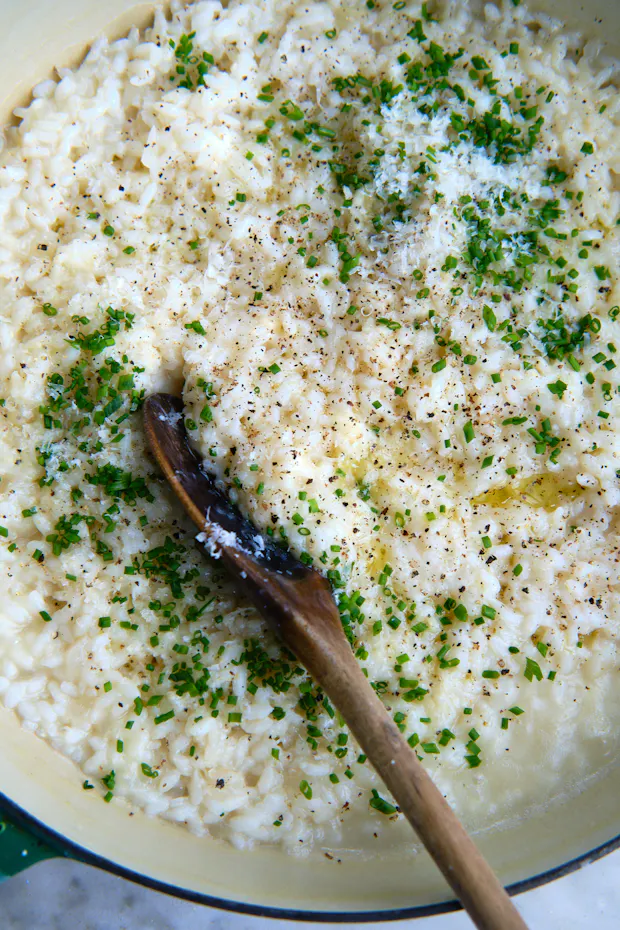
How To Make Risotto
Taking our lead from what Marcella Hazan tells us in The Classic Italian Cookbook, “…in making risotto, the objective is to cause rice to absorb, a little at a time, enough hot broth until it swells and forms a creamy union of tender, yet firm grains.”
In broader terms, these are the basic steps. Once you get your timing and flow down, you can adapt the process to a wide range of seasonal risottos. But it’s worth nailing down the fundamentals first.
- Start with great ingredients and equipment: Choose a high-quality risotto rice, and a wide, heavy-bottomed pan.
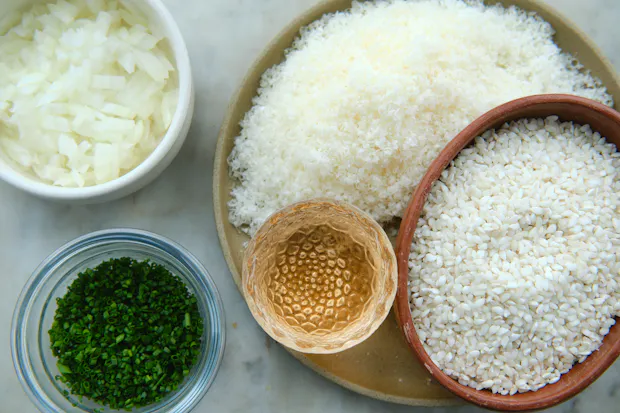
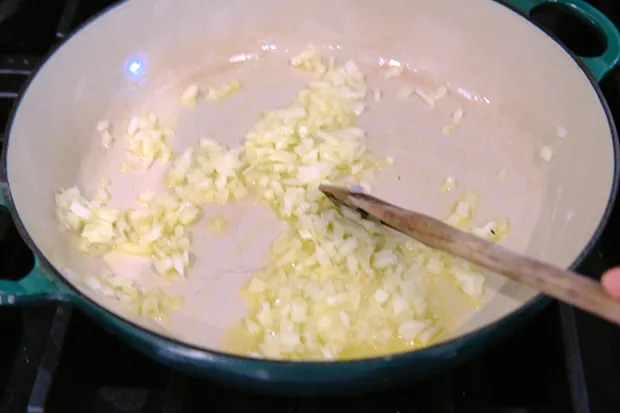
- Build the base: Sauté finely chopped onion or shallot in oil or butter until soft.
- Toast the rice: Add the rice and stir until well-coated and slightly translucent at the edges.
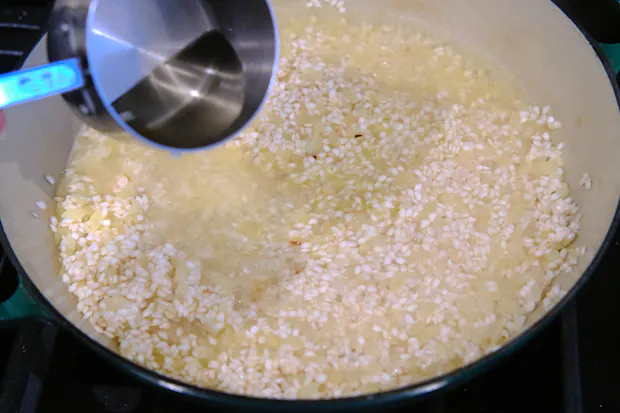
- Add liquid gradually: Increase the heat and begin adding hot liquid (salted water or broth) a splash at a time. Allow each addition to absorb before adding more. Different rices absorb different amounts at different speeds, you’ll need to adjust accordingly. It’s about vibes at this stage.
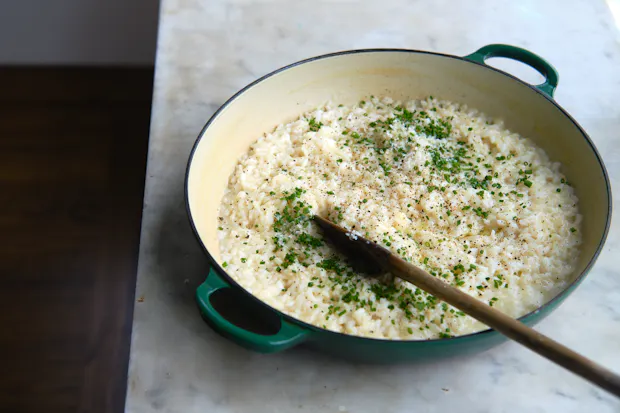
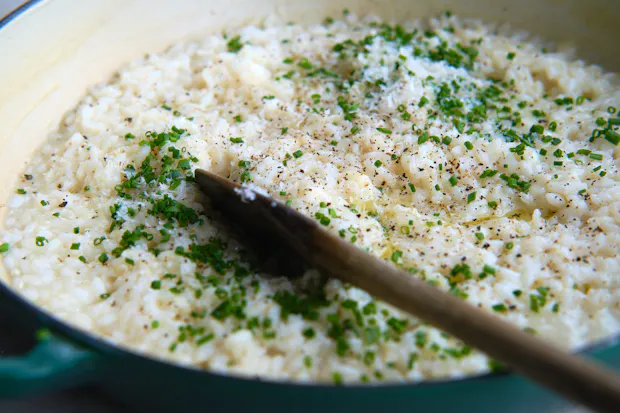
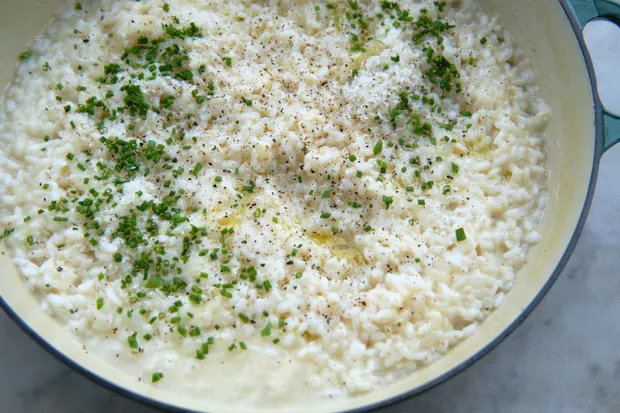
- Finish strong: Continue until rice is tender and creamy with a bit of a bite, then finish with olive oil and Parmesan, I like some chives as well (above). Your goal is a creamy, flowing risotto with tender distinct grains.
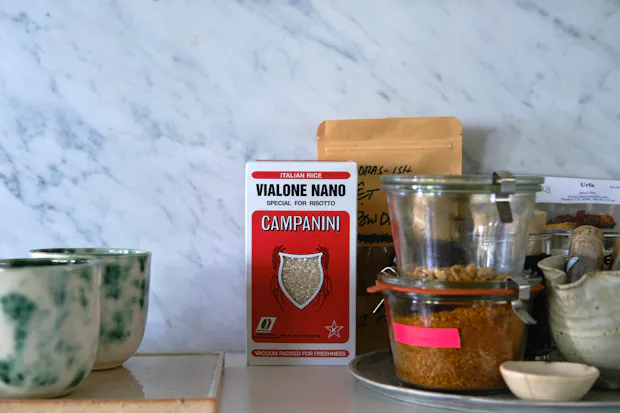
Best Rice For Risotto
I bought a box of Campanini Vialone Nano risotto rice a couple of years back, and it was a game changer. Risotto perfection, the kind you dream of. Before that, I made plenty of risotto-style dishes using pearled barley and farro, and endless batches with arborio and carnaroli rice. But the Vialone Nano was a record scratch for me. It snapped me right back to classic risotto territory - one of those “why mess with perfection?” moments. Now I make a classic risotto like this one about once a month.
That said, you can absolutely make great risotto with arborio, and carnaroli is excellent as well. But keep an eye out for other risotto rices - especially the Vialone Nano pictured above - because one of them might end up being your a-ha rice.
Common risotto rices: (each absorbs liquid differently)
- Arborio - widely available, solid choice, short and pearly, creamy
- Carnaroli: holds shape well, larger longer grain than Arborio, a little more dense
- Vialone Nano: my favorite, incredible texture, highly absorbent, creamy dreamy, thirsty
Equipment for Risotto
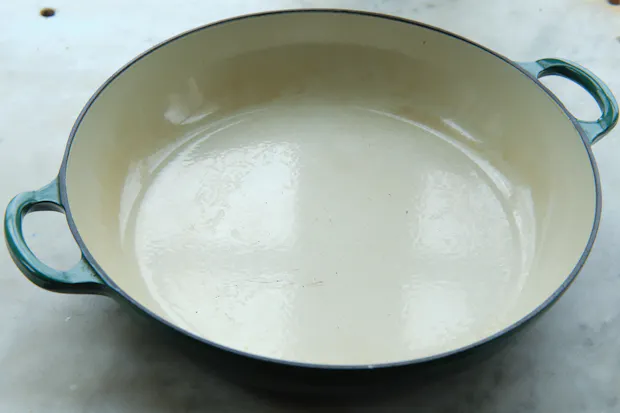
If you love risotto, and if you’re serious about making it part of your cooking rhythm, finding the right pan is half the battle. When my dad died I took his dark green, shallow Le Creuset braiser, and it quickly became my favorite risotto pot. It’s deep enough, expansively wide, and heavy - a triple win.
- The pan: A good risotto pan should be wide rather than narrow, thick rather than thin, and deep - but not so deep it makes regular stirring awkward.
- Wooden spoon: Skip the floppy spatulas and silicone, this is a job for an old-school wooden spoon. The structure of a wooden spoon lets you scrape the bottom of the pan and free any rice that sticks as you cook.
Do You Have to Stir Risotto Constantly?
I know you want me to tell you that you don’t need to stir risotto continuously, but here’s why you should. If you’re making great risotto, you’re cooking it over a lively burner, with enough heat to keep things bubbling. This means the rice on the bottom of your wide pan is going to stick pretty quickly. A big part of stirring is scraping the bottom of the pan, freeing up any grains that are starting to catch. So yes, when I’m cooking risotto, I’m right there at the stove with a wooden spoon the entire time.
Risotto: Variations
- Meyer Lemon Risotto: Inspired by a version in the Via Carota cookbook, I love this winter citrus variation. Warm three basil leaves with the oil at the beginning of the recipe below - discard them before adding shallots/onion. Finish the risotto with the zest and juice of two Meyer lemons. To make it extra special, use a Y-shaped vegetable peeler to peel the lemons (no white pith please!), then use a sharp know to slice the peels razor thin. Making hand cut zest (versus microplane grater) is arguably worth the extra effort.
- Citrus Risotto: A mixed citrus risotto is also great. I like orange zest and juice combined with equal parts lemon zest/juice. Or some grapefruit juice.
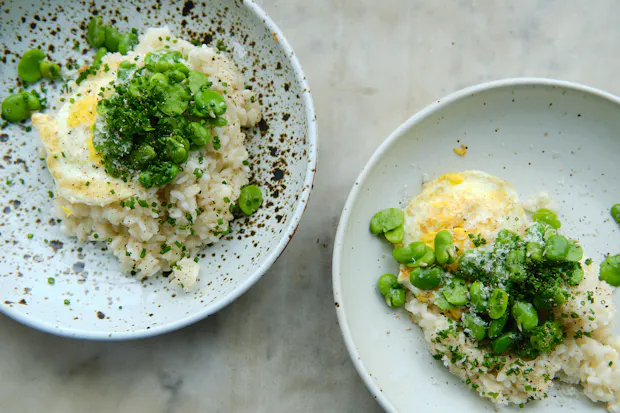
- Spring Risotto: We enjoyed this the other day - classic risotto topped with fava beans, a spoon-fried egg and lots of snipped chives. Pictured below.
- Mushroom Risotto: Use mushroom broth in place of the salted water. Serve topped with a double batch of these baked mushrooms. A dollop of creme fraiche brings it all home.
What To Do With Leftover Risotto
- Baked Arancini: I like to make a baked version of arancini (typically fried). Form small balls, the size of a walnut shell using wet hands. Coat with beaten egg and roll in breadcrumbs, bake at 375F until golden on the outsides.
- Risotto Cakes: Form cold risotto into firm patties about 3/4-inch thick using wet hands. Pan-fry in a generous amount of olive oil until deeply golden. If you’re worried about the rice patties being too delicate, mix in 1 egg for every two cups of leftover risotto. Shape, and pan fry in olive oil. Starting with cold risotto is key.
More Italian Recipes
More Rice Recipes
For more ideas, explore my collection of rice recipes. Some faves include:

Premium Ad-Free membership includes:
-Ad-free content
-Print-friendly recipes
-Spice / Herb / Flower / Zest recipe collection PDF
-Weeknight Express recipe collection PDF
-Surprise bonuses throughout the year
Classic Risotto
The recipe calls for dry white wine, but I typically use whatever is open - white, rose. In a pinch I’ve even used beer. More importantly, don’t skimp on the quality of Parmigiano Reggiano cheese, it plays a starting role here. Look for authentic, aged Parmesan, and grate with a microplane grater.
- 8 cups water
- 2 teaspoons fine grain sea salt
- 1/4 cup extra-virgin olive oil
- 1/2 cup finely chopped shallots (or onion)
- 1 1/2 cups / 300 g risotto rice (arborio, carnaroli, Vialone Nano)
- 1/2 cup dry white wine
- 1 1/2 ounces / 1 cup freshly grated Parmesan cheese
- 1/3 cup chives, finely chopped
- Freshly ground black pepper
-
Combine the water and salt in a medium saucepan and bring to a simmer while you prepare the other ingredients.
-
Heat 2 tablespoons of the olive oil in a wide, heavy-bottomed saucepan over medium heat. Add the shallots to the pan and stir with a wooden spoon until soft, but not browning, a couple minutes. Add the rice and stir continuously until it is well coated and glossy, 2 minutes or so. Increase the heat to high and stir in the wine.
-
Next you’re going to add the hot, salted water - one ladle (~1/2 cup) at a time - over the next twenty-ish minutes. After each addition of water, stir until it is well absorbed before adding more. Stir continuously, scraping any rice from the bottom of the pot with the wooden spoon. When the rice thickens and bubbles increasingly, you’ll know it’s time to add more water. In the end, you might not use all of the water, but cook the rice until the grains are tender, plump, and creamy. Not dry, and definitely not thin and runny. I typically end up using between 7-8 cups of the salted water over about 20+ minutes using Vialone Nano rice.
-
To finish, drizzle with the remaining 2 tablespoons of olive oil while stirring, before adding most of the Parmesan cheese. Stir well and served topped with remaining Parmesan cheese, chives, and black pepper.
Serves 4-6.
Related Recipes
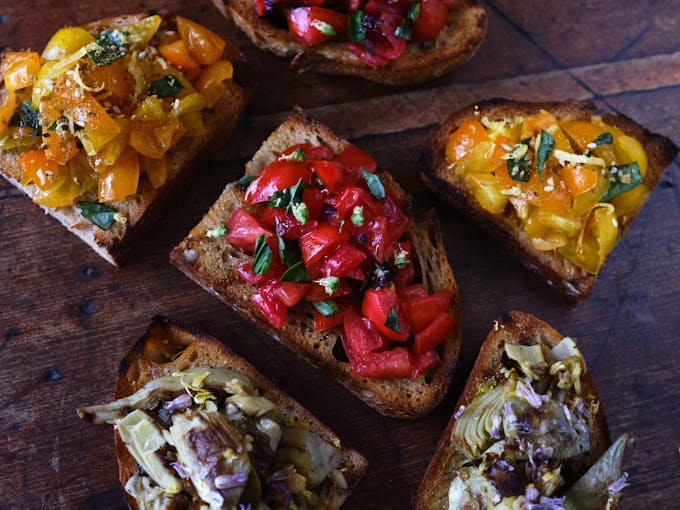
Simple Bruschetta
Good tomatoes are the thing that matters most when it comes to making bruschetta - the classic Italian antipasto. It is such a simple preparation that paying attention to the little details matters.
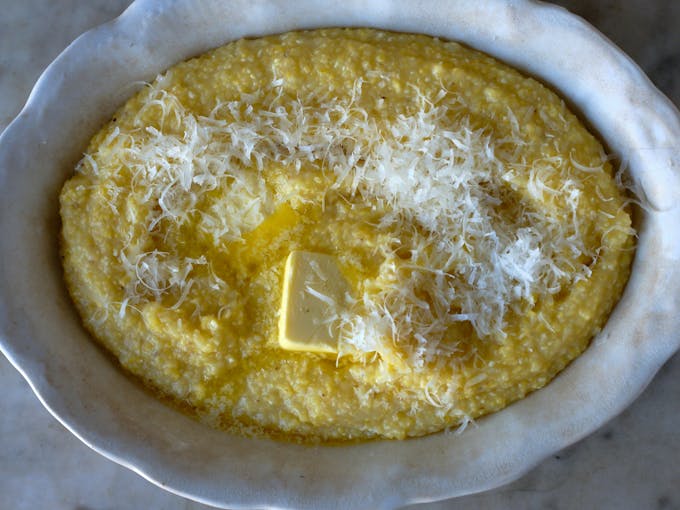
Creamy Polenta
If you want to make beautifully creamy polenta on the stovetop, you're on the right page. The ingredient list is short, and the leftovers deliver meals for days.
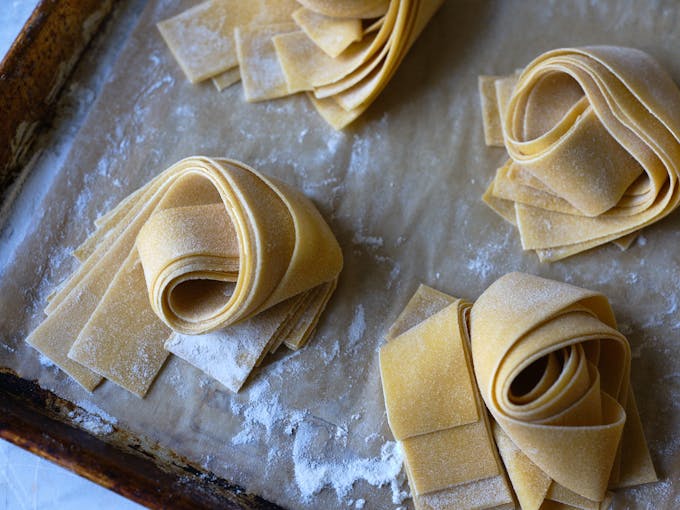
Homemade Pappardelle
Simple, homemade pappardelle pasta is a deliciously versatile shape to make! Pictured below topped with crispy mushrooms, clouds of Parmesan cheese, and lemon.
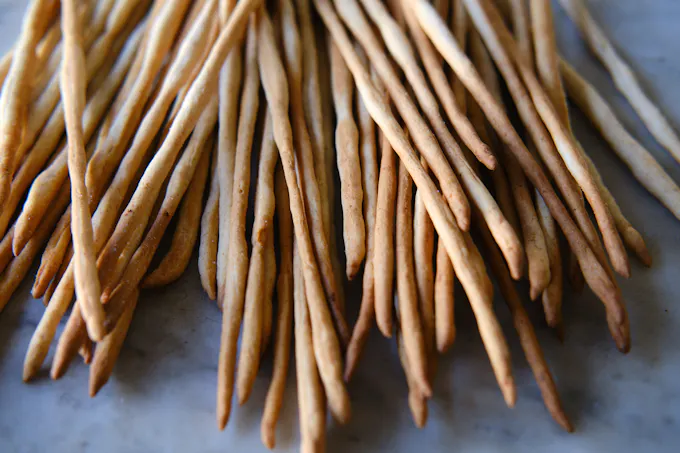
Grissini (Italian Breadsticks)
Everything I know about making grissini. These beloved, pencil-thin Italian breadsticks are made with just five ingredients. No mixer is needed and you don’t need to proof your yeast.
Comments are closed.
Apologies, comments are closed.
Comments
That looks awesome!
What kind of wine did you use? I’m always curious as to what people use for cooking.
I typically use a dry white wine, whatever I have open and like. For the version photographed I had a bottle of rose open and used that!
Heidi – Risotto is one of my VERY favorite things to cook. I find it totally therapeutic to stand around the range coaxing something so creamy and soothing into existence. I *just* made my first barley ‘risotto’ the other day (without the therapy by) using a slow cooker. It was a sausage and fennel risotto using hulled barley. It turned out fabulously, and while I didn’t get to do the normal risotto routine, it was fantastic to come home to a big, fragrant pot of comfort food. This recipe sounds divine and I’ll give it a shot, as well as subbing barley for Arborio more often (I’m a big fan of getting more bang from your nutritional buck whenever possible). Thanks!!
Hi, love the blog Heidi. I’m a vegetarian food and drink journalist from London. One of the fashionable dishes in London restaurants right now is beetroot (beet), barley and Barollo (red wine) risotto. Delicious, and with with gorgeous colours too!
Comments are closed.
Apologies, comments are closed.
More Recipes
Weekly recipes and inspirations.
Popular Ingredients